
Somewhere in a Romanian municipality, a document from 2019 is sitting in a box. It might take twenty minutes to be found, or two hours, depending on which employee archived it and whether they followed that month’s labeling convention. Four computer science students from Cluj-Napoca solved this problem.
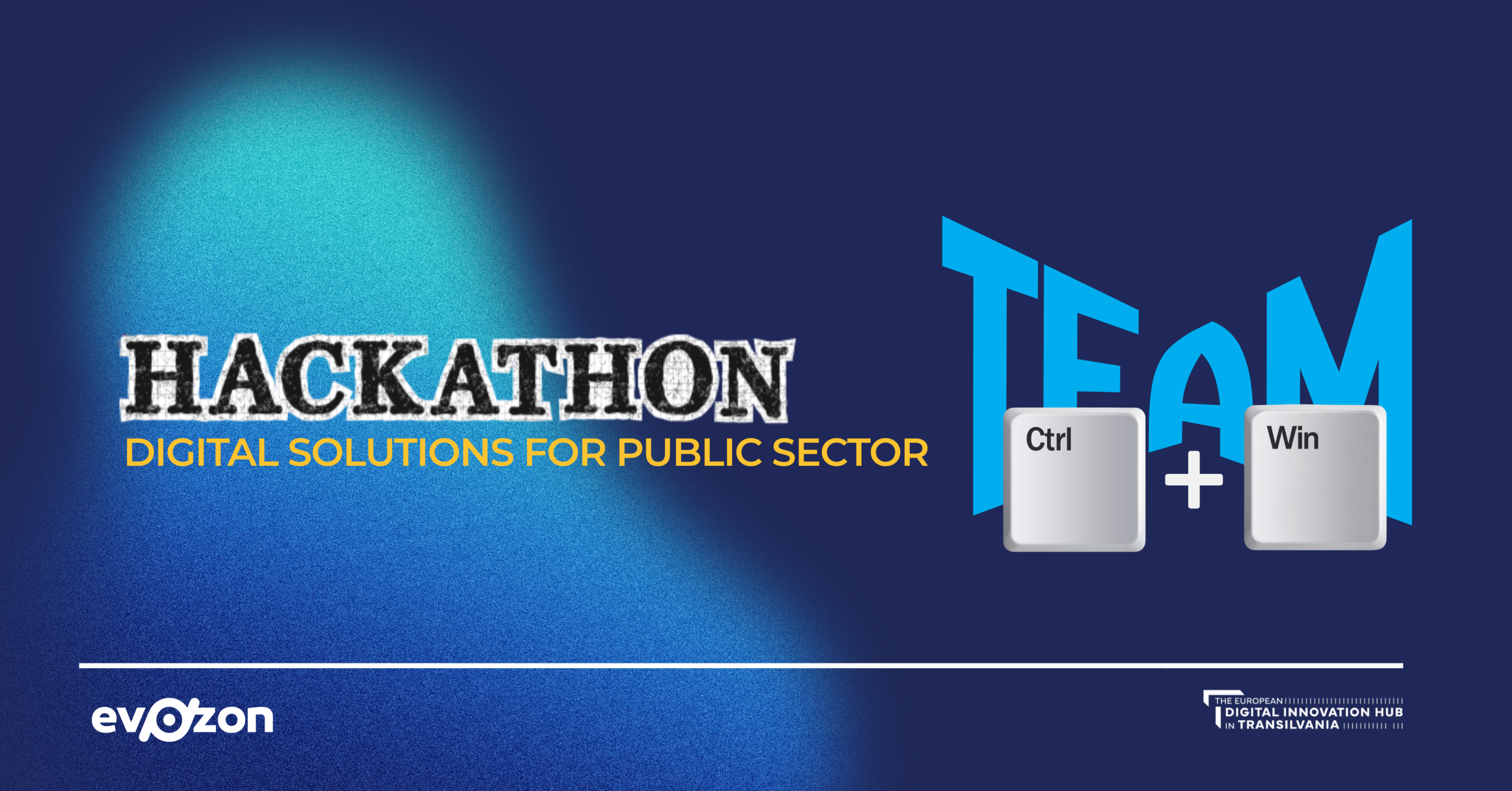
The European Digital Innovation Hub in Transylvania (TEDIHT) took three problems from real public institutions, handed them to student teams from UBB Cluj’s Faculty of Mathematics and Informatics, and asked them to build and Evozon joined as mentors.
Three real digitalization solutions for three real problems in Romanian Public Institutions
TEDIHT organized discussions with employees from public institutions, conducted digital maturity audits, and identified where things actually break down.
This is how the three main themes of the 2026 Hackathon emerged.
| ● | Intelligent HelpDesk for public institution employees – proposed by INCDTIM, coordinated by Oana Raița |
| ● | Intelligent system for document inspection and archiving – proposed by UTCN, coordinated by Ovidiu Stan |
| ● | Intelligent system for managing and monitoring parking subscriptions – proposed by UBB, coordinated by Darius Bufnea |
Three concrete solutions, each owned by three different students’ teams and different academic digitalization partners.
Arhivis: The AI Document archiving platform built in three months
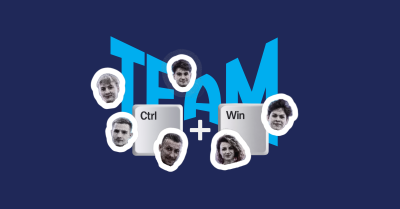
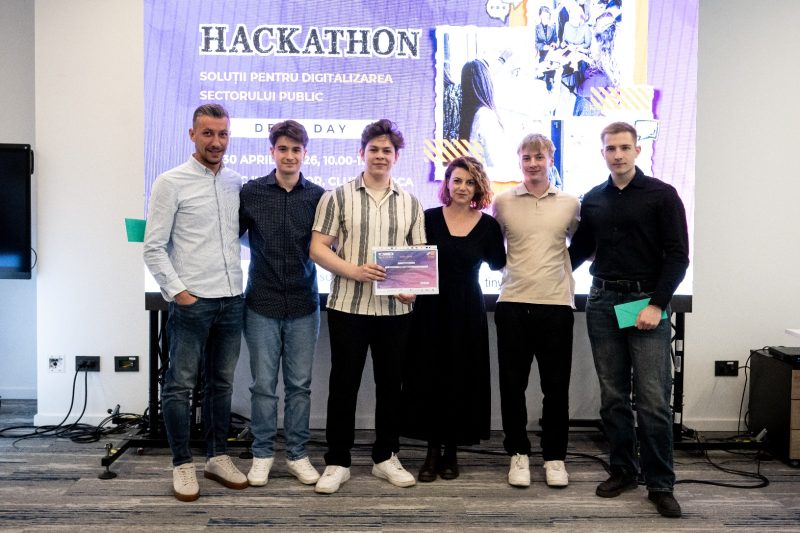
During the Hackathon, as a digital partner of TEDIHT (The European Digital Innovation Hub in Transylvania), Evozon supported the Ctrl+Win team by mentoring the four students, Darius Pop, Dobrincu Stefan, Robert Postu, David Cristian Strimbu, in developing their solution, named Arhivis, from concept validation to technical implementation.
Arhivis is intended to complement, not replace, human effort by introducing greater clarity and support into routine public sector processes. Arhivis has a tagline that translates cleanly: order in documents, clarity in decisions.
The platform uses OCR and Azure AI Services to extract key data from scanned documents automatically the moment they enter the system. An employee reviews the extracted fields and approves them, and the document moves into the institution’s digital archive, indexed, searchable, and access-controlled.
Every action is logged for compliance. The org chart adapts to match whatever structure the institution actually uses. Documents come in by manual upload or directly from a physical scanner, automatically.
Ctrl+Win also built in both a SaaS delivery model and an on-premises option. Public institutions with strict data governance requirements don’t always have the option of putting sensitive citizen documents in someone else’s cloud. The underlying tech needed to be “maintainable” as expected: React, Java Spring Boot, PostgreSQL, and Azure Cloud.
How Evozon’s mentors shaped both the product and the business case
Evozon’s mentors, Alexandra Costachescu and Vlad Taran, worked with Ctrl+Win across the full arc of the project, not just the technical architecture but also the business logic underneath it.
How do you explain the value of a document management system to a city procurement committee that has seen five vendors promise the same thing?
How do you build a roadmap when the client doesn’t know what they need until they see a prototype?
The mentors pushed the team to build a business case alongside the platform. Architectural decisions were challenged and refined. Before being released to the public, the pitch and demo received real feedback. Hours of mentoring, spread across three months.
What resulted was a winning team at Hackathon Tediht that showcased Arhivis to academic and public institution representatives, along with a platform that a municipality could assess, test, and actually implement.
What this means for Public Sector AI Adoption in Romania
Mentoring Ctrl+Win wasn’t just an exercise in giving back. It was a reminder that when you put the right constraints on a problem, good engineers build good software.
The solutions that came out of this program were production-ready, architecturally sound, and built with security in mind from the start.
For Evozon’s team, it was a confirmation that smart, innovative work always finds its way into the real world.
FAQs
Arhivis is an AI-powered document inspection and archiving platform developed by the student team Ctrl+Win during the TEDIHT Hackathon in Cluj-Napoca. It addresses a widespread inefficiency in Romanian public institutions: the manual filing and retrieval of physical documents, which can take anywhere from minutes to hours depending on how consistently archiving conventions are applied. Arhivis uses OCR and Azure AI Services to automatically extract key data from scanned documents at the point of entry. Employees review and approve the extracted fields, after which documents are stored in a digital archive that is fully indexed, searchable, and access-controlled. All actions are logged for regulatory compliance. The platform supports both SaaS and on-premises deployment, making it viable for public institutions with strict data governance requirements.
TEDIHT the European Digital Innovation Hub in Transylvania is a regional initiative that bridges the gap between academic talent and real-world public sector digitalization needs. Rather than defining problems top-down, TEDIHT conducts digital maturity audits and employee focus groups within public institutions to identify where workflows actually break down. These verified problems are then assigned to student teams, primarily from UBB Cluj’s Faculty of Mathematics and Informatics, who are challenged to build functional solutions within a fixed timeframe. Academic digitalization partners and private sector mentors including companies like Evozon support the teams throughout the process. The result is a structured innovation pipeline that produces prototypes municipalities can realistically evaluate and implement.
Evozon participated in the TEDIHT program as a mentoring partner for the Ctrl+Win student team, providing 14 hours of structured mentorship across a three-month development cycle. Evozon’s mentors Alexandra Costachescu and Vlad Taran guided the team not only on technical architecture decisions but also on building a coherent business case alongside the platform itself. This included coaching on how to communicate value to non-technical procurement committees, how to structure a roadmap when client requirements are still being discovered, and how to prepare a pitch and demo that could withstand scrutiny from academic and public institution representatives.
Arhivis is built on a stack designed for reliability, maintainability, and compliance with public sector requirements: React for the front-end, Java Spring Boot for back-end services, PostgreSQL as the relational database, and Azure Cloud for AI processing and infrastructure. The platform integrates Azure AI Services to handle OCR and automated data extraction from scanned documents. A key architectural decision is the dual deployment model: Arhivis can run as a SaaS solution or be deployed entirely on-premises a critical requirement for Romanian public institutions that cannot place sensitive citizen data in third-party cloud environments.